


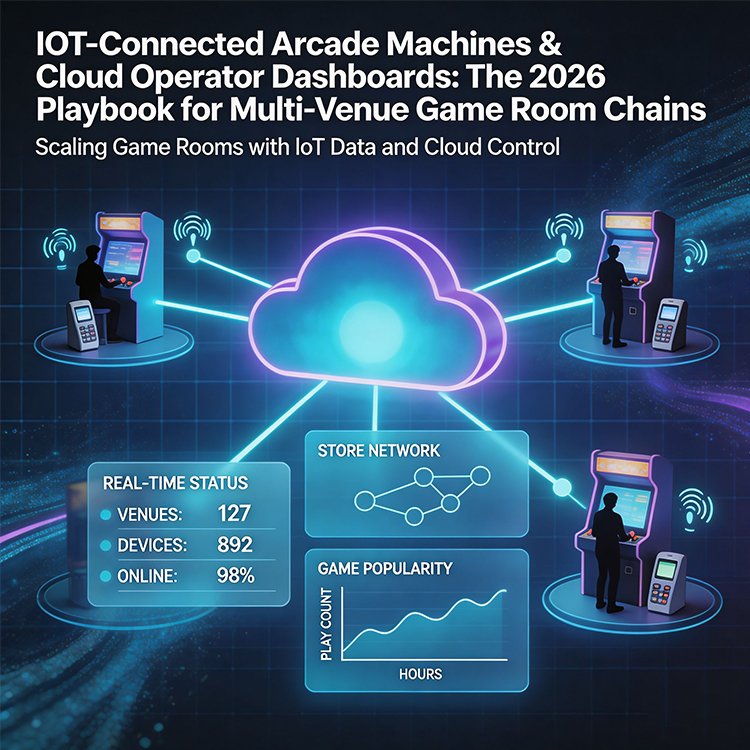
Para operadores de fliperamas que administram mais de um estabelecimento, ou para investidores que planejam construir uma rede, a maior diferença entre "lucrativo" e "altamente lucrativo" reside nos dados.
Qual máquina específica, em qual local específico, gerou a maior receita no último sábado? Qual máquina apresentou uma falha mecânica que ninguém relatou? Qual aceitador de moedas está rejeitando mais moedas do que a média? Qual dispensador de tickets está próximo do fim de sua vida útil? Qual estabelecimento está com uma queda de receita nas noites de sexta-feira nas últimas 8 semanas? Sem dados operacionais específicos de cada máquina, essas perguntas só podem ser respondidas percorrendo o salão, abrindo o cofre de moedas e torcendo para que a equipe tenha se lembrado de registrar o problema.
Com máquinas de fliperama conectadas à IoT e um painel de controle operacional na nuvem, todas essas perguntas são respondidas em tempo real — de um laptop, de um celular, de qualquer lugar. Este artigo, escrito sob a perspectiva da engenharia de fábrica da Sunflower Amusement, explica como os equipamentos de fliperama habilitados para IoT funcionam, o que um painel de controle operacional oferece e como os insights operacionais se traduzem em aumento mensurável de receita para as redes de fliperamas.
A verdadeira pergunta do comprador — além de “Funciona?”
Perspectiva do comprador: Um operador regional de uma rede de FECs (Family Entertainment Entertainment) com 4 estabelecimentos nos Emirados Árabes Unidos levanta uma questão prática: "Sei que a IoT (Internet das Coisas) está na moda, mas conectar minhas máquinas de jogos eletrônicos a um painel de controle na nuvem realmente muda meu negócio, ou é apenas um recurso pelo qual estou pagando?"
A resposta sincera, com base nos dados de campo da Sunflower sobre operadores da cadeia produtiva que utilizam nossas máquinas habilitadas para IoT: Sim, quando os dados são utilizados, os operadores de cadeias de suprimentos normalmente observam uma melhoria na receita de 12 a 221 TP3T em relação à sua linha de base pré-IoT nos primeiros 6 meses, impulsionada principalmente por uma resposta mais rápida a falhas, precificação dinâmica e decisões de otimização do mix de máquinas que seriam impossíveis sem dados em tempo real.
A palavra-chave é "quando os dados são usados". A conectividade da IoT que ninguém analisa é apenas uma conta mensal de dados móveis. O valor surge quando a operadora ou seu gerente de operações toma decisões com base nos dados.
O que a IoT realmente significa em uma máquina de jogos arcade comercial.
Perspectiva do engenheiro de design da Sunflower: O termo “IoT” (Internet das Coisas) abrange uma ampla gama de aplicações. Em equipamentos de jogos eletrônicos comerciais, IoT significa especificamente que a máquina possui:
1. Um Módulo de Conectividade
Componentes físicos que conectam a máquina à internet:
- Módulo celular 4G/LTE — O mais comum em casas de jogos eletrônicos; independente da confiabilidade do Wi-Fi do local. Custa de US$ 25 a US$ 65 por máquina, mais um plano de dados móveis de US$ 3 a US$ 8 por mês.
- Módulo Wi-Fi — Mais barato, mas depende da estabilidade da rede Wi-Fi do local, que costuma ser precária em ambientes de fliperama com alta densidade de pessoas devido a interferências.
- Módulo Ethernet — Mais confiável, porém requer a instalação de cabos; normalmente usado apenas em instalações permanentes.
- Rede mesh BLE + gateway — As máquinas se conectam via Bluetooth a um gateway central, que por sua vez se conecta via Ethernet ou rede celular. Isso reduz os custos de conectividade por máquina em larga escala.
2. Um firmware para coleta de dados
Software executado na placa de circuito impresso principal da máquina que envia dados operacionais para a nuvem:
- Inserções de moedas/fichas/pagamentos sem dinheiro — todos os créditos inseridos, com registro de data e hora
- Pagamentos de bilhetes — cada bilhete emitido, com registro de data e hora
- Códigos de falha — cada erro, com registro de data e hora, com detalhes do subsistema
- Sessões de brincadeira — Hora de início, duração, motivo do término (concluído, abandonado, erro)
- Leituras do sensor — RPM do motor, temperatura, estado de funcionamento do sensor
- Versão e configuração do firmware — para controle de versão e atualizações remotas
3. Um backend seguro na nuvem
Um servidor em nuvem que recebe, armazena e analisa os dados:
- Ingestão de dados — as máquinas reportam continuamente (normalmente: a cada 30–60 segundos) ou quando ocorrem eventos
- Armazenamento e retenção — normalmente de 12 a 36 meses de dados completos por máquina
- Análises — Cálculos de tendências, relatórios comparativos, detecção de anomalias
- Acesso à API — Permite a integração com sistemas POS de terceiros, plataformas de pagamento sem dinheiro ou ferramentas de inteligência de negócios.
4. Um painel de controle do operador
A interface web/móvel onde o operador visualiza os dados:
- Visão geral de vários locais — receita de alto nível e situação sanitária em todos os locais
- perfuração em nível de máquina — histórico específico de desempenho e falhas da máquina
- Gráficos de tendência — comparações de dia/semana/mês/ano
- Configuração de alertas — Notificações por e-mail/SMS/push para eventos definidos (falha, baixa receita, adulteração)
O que um painel de controle de operador real mostra para você
Perspectiva do engenheiro de design da Sunflower: Abaixo, segue o que um operador com 3 estabelecimentos e um total de 60 máquinas habilitadas para IoT da Sunflower vê ao fazer login na manhã de segunda-feira:
Tela 1 — Visão geral de vários locais
- Receita total do fim de semana por local, com alteração % em comparação com o mesmo fim de semana do ano passado.
- As 5 principais máquinas de gerar receita em toda a cadeia
- As 5 máquinas de receita menos lucrativas — candidatos para reposicionamento ou substituição
- Máquinas atualmente offline (falha) com tempo desde a falha
- Saúde do sistema sem dinheiro — conectividade do leitor por local
Tela 2 — Detalhe em nível de máquina (furação em uma máquina)
- Gráfico de tendência de receita de 7 dias — identifique o padrão de fim de semana/dia de semana
- Contagem de sessões de jogo — Muitas sessões, mas baixa receita = preço muito baixo; poucas sessões, mas alta receita = preço ideal
- Registro de falhas — todos os erros que a máquina apresentou nos últimos 30 dias
- Indicadores de saúde dos componentes — Tendência da temperatura do motor (aumento = desgaste do rolamento iminente), tempos de resposta do sensor (diminuição = necessidade de limpeza), taxa de rejeição do aceitador de moedas (aumento = necessidade de atualização ou substituição do firmware)
- Histórico de serviço — Quando foi feita a última manutenção nesta máquina, por quem e o que foi feito?
Tela 3 — Análises Comparativas
- Mesmo modelo de máquina, locais diferentes. — Por que a mesma máquina de empurrar moedas para vários jogadores no Local A gera US$ 950 por semana, enquanto no Local B gera US$ 680 por semana? Localização? Preço? Tráfego? O painel de controle mostra os dados; a decisão cabe ao operador.
- Mesmo local, semanas diferentes — Por que a receita de quarta-feira caiu 18% por duas semanas seguidas? Houve feriado escolar? Algum concorrente fez alguma promoção?
- Comparação da mesma categoria — Qual modelo de máquina de empurrar moedas tem um desempenho consistentemente melhor do que os outros? Encomende mais do modelo vencedor; retire o modelo com desempenho inferior.
Tela 4 — Alertas e ações
- Alertas de falha — E-mail/SMS automático quando uma máquina entra em estado de falha
- alertas de limite — “A receita da Máquina X está 25% abaixo da sua média dos últimos 30 dias esta semana”
- Alertas de manutenção preditiva — “A temperatura do motor da Máquina Y apresentou uma tendência de 8°C acima da linha de base ao longo de 14 dias; recomenda-se inspeção”
- Alertas de recarga — máquinas integradas para pagamentos sem dinheiro relatam baixo nível de papel para bilhetes, baixo nível de moedas no reservatório, etc.
O impacto na receita: como os dados da IoT se traduzem em dólares
Perspectiva do engenheiro de design da Sunflower: Operadores de redes de supermercados que utilizam máquinas com tecnologia IoT da Sunflower compartilham aqui as maneiras específicas pelas quais os dados impulsionam o aumento da receita:
1. Resposta a falhas mais rápida = Maior tempo de atividade
Sem IoT: Uma máquina apresentou defeito na tarde de sábado; a equipe percebeu o problema na manhã de domingo; o gerente do local relatou o ocorrido na segunda-feira; o distribuidor enviou um técnico na terça-feira; a máquina foi consertada na quarta-feira. Tempo de inatividade: aproximadamente 4,5 dias.
Com a IoT: Falhas na máquina às 15h47 de sábado; alerta automático para o gerente de operações às 15h48; equipe do local notificada via aplicativo; falhas simples (atolamento de papel, reinicialização) resolvidas até as 16h15. Falhas complexas foram encaminhadas para assistência técnica na manhã de domingo. Tempo de inatividade: 4 a 20 horas.
Impacto na receita: Para uma máquina com custo médio de US$ 950 por semana, reduzir 4,5 dias de inatividade para 1 dia recupera mais de US$ 500 por incidente de falha. Em uma cadeia de 60 máquinas com uma média de 2 a 4 incidentes de falha por ano por máquina, isso representa uma receita recuperada de US$ 60.000 a US$ 120.000 por ano.
2. Posicionamento de máquinas orientado por dados
Sem IoT: O gerente do local posiciona as máquinas com base na intuição. As máquinas de maior faturamento são colocadas na entrada; as de menor faturamento preenchem os cantos vazios. As decisões de posicionamento são atualizadas somente quando uma máquina é desativada.
Com a IoT: O painel de controle mostra quais máquinas, em quais posições, geram quanto. Os operadores descobrem padrões surpreendentes: uma máquina de empurrar moedas, movida do canto para a entrada, teve um aumento de faturamento de US$ 480/semana para US$ 870/semana. Um jogo de habilidade com baixo desempenho no Local A estava apresentando ótimo desempenho no Local B, na mesma posição — o que indica que o jogo era bom, mas o fluxo de jogadores no Local A não era adequado para aquele jogo.
Impacto na receita: Operadores que utilizam dados de IoT para testar sistematicamente o posicionamento geralmente melhoram a receita total do piso em 8 a 151 TP3T em 6 meses.
3. Otimização de Preços
Sem IoT: Todas as máquinas têm o mesmo preço em todos os locais, todos os dias e todos os horários. Simples, mas significa deixar dinheiro na mesa.
Com a IoT: Os operadores podem testar preços dinâmicos — US$ 0,75 por reprodução nos fins de semana contra US$ 0,50 durante a semana; US$ 1,00 por reprodução em locais premium contra US$ 0,50 em locais mais econômicos. Os dados mostram quais estratégias de precificação aumentam a receita sem reduzir o volume de reproduções.
Impacto na receita: Melhoria de receita de 5 a 12% por meio da otimização de preços, alcançável em 90 dias.
4. Manutenção preditiva
Sem IoT: As máquinas são submetidas a manutenção de acordo com um cronograma fixo ou quando apresentam falhas. Isso resulta em desperdício de tempo do técnico ou em tempo de inatividade.
Com a IoT: Máquinas com leituras de sensores degradantes, temperaturas do motor em aumento ou taxas de falhas crescentes são programadas para manutenção antes de apresentarem defeitos. Máquinas com telemetria precisa podem ter seus intervalos de manutenção estendidos.
Impacto na receita: Redução do tempo de inatividade não programado em 40–60%; redução do custo da mão de obra de manutenção em 15–25%.
5. Integração de Sistemas Sem Dinheiro em Espécie
Sem IoT: Os dados do sistema de pagamento sem dinheiro ficam armazenados no próprio sistema; os dados de desempenho da máquina ficam armazenados na própria máquina. Duas visões separadas.
Com a IoT: Os dados de crédito eletrônico inserido, os bilhetes pagos e as sessões dos jogadores estão todos correlacionados. Os operadores podem ver quais máquinas geram o maior gasto por cliente, quais máquinas convertem visitantes ocasionais em jogadores que carregam cartões e quais jogos são carregados com cartões, mas raramente jogados (indicando um problema de posicionamento).
O que levar em consideração ao escolher máquinas habilitadas para IoT
Perspectiva do engenheiro de design da Sunflower: Nem todas as máquinas de jogos eletrônicos com "IoT" oferecem o mesmo valor. Ao avaliar fabricantes que alegam ter capacidade de IoT, verifique:
1. Propriedade e Portabilidade de Dados
O comprador deve ser o proprietário dos seus dados operacionais — não o fabricante. A exportação de dados em formatos padrão (CSV, JSON ou acesso via API) deve estar disponível sem custos adicionais. Dados bloqueados em uma plataforma proprietária representam um risco de sequestro.
2. Acesso à API aberta
O painel de controle é apenas uma das interfaces. Os operadores de cadeias de suprimentos geralmente desejam integrar os dados das máquinas com:
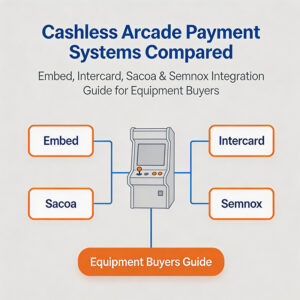
- Sistema sem dinheiro (Embed, Intercard, Sacoa, Semnox)
- Sistema POS para estabelecimentos
- Ferramentas de Business Intelligence (Power BI, Tableau, Google Data Studio)
- Relatórios internos personalizados
Uma plataforma de IoT sem acesso à API fica limitada ao que o fabricante escolhe exibir.
3. Cadença de atualização de firmware
Os recursos de software melhoram com o tempo. Um fabricante que lança atualizações de firmware de 4 a 6 vezes por ano está investindo na plataforma. Um fabricante que não lança atualizações desde o lançamento original não está.
4. Modelo de Custo de Dados Celulares
Os planos de dados móveis devem ser transparentes:
- Gerenciado pelo fabricante com repasse de custos. — normalmente USD 3–8/mês por máquina
- Gerenciado pelo comprador com slot para SIM — o comprador adquire seu próprio chip SIM celular (melhor para redes de lojas com contratos de operadoras já existentes)
- Livre para sempre — geralmente não é sustentável; o fabricante está subsidiando (temporariamente) ou a conectividade é de baixa largura de banda (funcionalidade limitada)
5. Política de Retenção de Dados
A retenção de dados a longo prazo é importante para comparações anuais. O mínimo aceitável é de 24 meses de dados completos. O ideal é de 36 meses ou mais, com acesso ao arquivo para dados mais antigos.
6. Segurança e Conformidade
Especialmente importante para mercados com regulamentações de dados rigorosas:
- Criptografia de dados em trânsito (HTTPS/TLS) e em repouso
- Controle de acesso baseado em funções Assim, a equipe do local vê os dados do local, a sede vê tudo e os distribuidores veem sua região.
- Conformidade com o RGPD/CCPA quando aplicável
- Registro de auditoria de quem acessou quais dados e quando
Plataforma de IoT da Sunflower Amusement
As máquinas comerciais da Sunflower Amusement (modelos de 2023 e posteriores) são enviadas com a tecnologia IoT integrada de série, com conectividade celular disponível como opcional de fábrica:
- Dados de receita e de falhas em tempo real Os dados são reportados à plataforma em nuvem SunConnect da Sunflower ou exportados via API para qualquer sistema do cliente.
- Painel de controle em inglês/espanhol/árabe com suporte para aplicativo móvel
- API aberta para integração com sistemas de pagamento sem dinheiro, PDV e ferramentas de BI.
- Plano celular gerenciado pelo fabricante por USD 4/mês por máquina, ou opção de SIM gerenciado pelo comprador.
- Retenção de dados por 36 meses Padrão; disponível por mais tempo mediante solicitação.
- Atualizações trimestrais de firmware sem custo algum
- Zero bloqueio de dados — Os dados do cliente pertencem ao cliente e podem ser exportados a qualquer momento.
Para operadores de redes e distribuidores com várias unidades, oferecemos personalização da marca nos painéis de controle como parte de acordos comerciais mais amplos.
**Está pensando em máquinas com IoT integrada para sua rede?** [Solicite uma demonstração ao vivo do painel SunConnect](https://www.sunfloweramusements.com/contact-us-amusement-machine-manufacturer-wholesale/) com dados de exemplo de operações reais ou [navegue em nosso catálogo de produtos compatíveis com IoT](https://www.sunfloweramusements.com/shop/) para identificar quais modelos se encaixam no planejamento tecnológico da sua rede.
Perguntas frequentes
P: As máquinas de jogos eletrônicos conectadas à IoT realmente aumentam a receita?
R: Sim, quando o operador utiliza os dados. Operadores de redes de supermercados geralmente observam um aumento de receita de 12 a 221 TP3T em até 6 meses após a implementação de máquinas conectadas à IoT e o uso dos dados operacionais. Operadores que instalam máquinas de IoT, mas nunca consultam o painel de controle, não observam nenhuma melhoria — a tecnologia só gera valor quando aplicada à tomada de decisões.
P: Qual o custo da conectividade IoT por máquina?
A: O custo do hardware é de USD 25 a 65 por máquina (normalmente incluído no preço da máquina para modelos compatíveis com IoT). Os planos de dados móveis custam de USD 3 a 8 por mês por máquina para uso típico. As opções de Wi-Fi e Ethernet não têm custo recorrente de conectividade, mas exigem infraestrutura no local.
P: Posso usar recursos de IoT com sistemas de pagamento sem dinheiro como Embed ou Intercard?
R: Sim. A plataforma de IoT da Sunflower integra-se com os principais sistemas de pagamento sem dinheiro por meio de API aberta. Os dados correlacionados (créditos de pagamento sem dinheiro + jogos em máquinas + pagamentos de bilhetes) fornecem insights significativamente mais profundos do que qualquer um dos sistemas isoladamente.
P: Que dados são efetivamente coletados das minhas máquinas?
A: Apenas dados operacionais: créditos inseridos, bilhetes emitidos, sessões de jogo, códigos de erro, leituras de sensores, estado do firmware. Não inclui dados pessoais dos jogadores. Todos os dados pertencem à operadora e podem ser exportados a qualquer momento.
P: O que acontece se a conexão celular for perdida?
A: A máquina continua a operar normalmente. Os dados são armazenados em buffer localmente e sincronizados quando a conectividade é restabelecida. Interrupções prolongadas (dias) são monitoradas e relatadas para que o operador saiba que deve investigar problemas de conectividade.
P: Posso integrar dados de IoT com o sistema de PDV do meu estabelecimento?
A: Sim, através da API aberta da Sunflower. Muitos operadores de redes criam painéis personalizados que combinam dados de receita de máquinas com receita de alimentos e bebidas, reservas para festas e tráfego total do local para uma visão completa do negócio.
P: Quanto tempo leva para observar uma melhoria na receita com a implementação da IoT?
A: As melhorias na resposta a falhas são imediatas (primeiro evento de falha). A otimização do posicionamento requer de 4 a 8 semanas de dados para identificar padrões. A otimização de preços requer de 6 a 12 semanas de variações testadas. O impacto total na receita geralmente é visível em 6 meses.
P: Os dados da minha máquina estão seguros?
R: Sim. A plataforma de IoT da Sunflower utiliza criptografia padrão do setor em trânsito e em repouso, controle de acesso baseado em funções e registro de auditoria. Os dados do cliente nunca são compartilhados com terceiros sem consentimento explícito. O armazenamento de dados pode ser localizado regionalmente para atender aos requisitos do GDPR, da residência de dados no Oriente Médio e Norte da África (MENA) ou de outras regulamentações.
Sugestões de links internos:



Adicionar comentário