

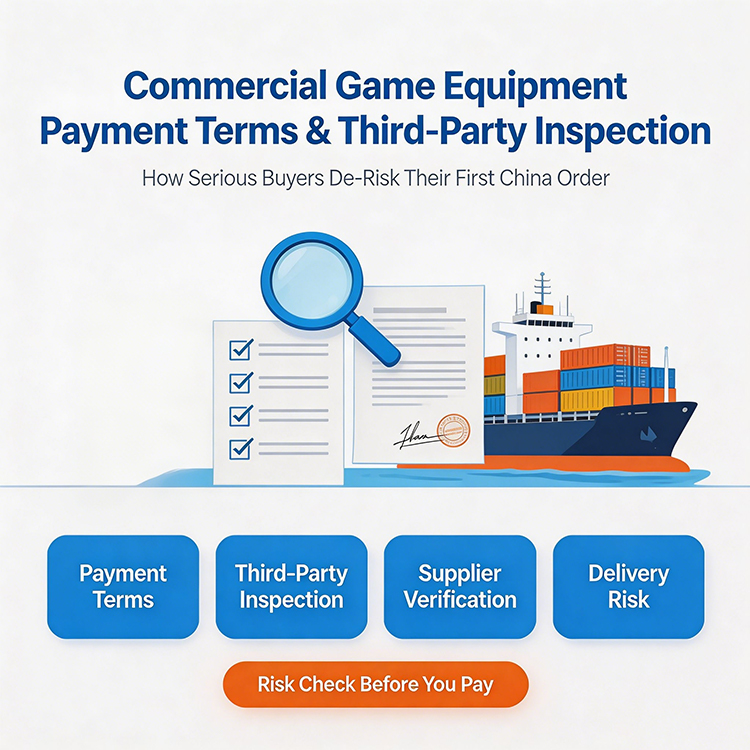
Per chi acquista per la prima volta attrezzature da gioco commerciali dalla Cina, la maggiore fonte di ansia prima di firmare un ordine di acquisto non riguarda le macchine in sé, bensì la transazione: “Se trasferisco questo acconto a una fabbrica a 8.000 miglia di distanza, cosa impedisce che spariscano? Come faccio a sapere che il container che arriva contiene effettivamente le macchine che ho ordinato?”
Queste sono le domande giuste. Ogni acquirente serio di attrezzature per giochi al coperto, dagli investitori indipendenti nel settore dei centri di intrattenimento per famiglie alle grandi aziende di distribuzione con fatturati multimilionari, dovrebbe porsele prima di ogni transazione. E la risposta onesta è che il rischio di transazione è reale, ma è anche gestibile attraverso strutture di pagamento ben documentate, ispezioni professionali pre-spedizione e meccanismi di risoluzione delle controversie standardizzati nel settore da decenni.
Questa guida, redatta dal punto di vista della fabbrica di Sunflower Amusement dopo 16 anni di esportazione verso distributori in Medio Oriente, America Latina, Unione Europea e Nord America, illustra i termini di pagamento specifici, i protocolli di ispezione e le pratiche di gestione del rischio che distinguono gli acquirenti professionali da coloro che subiscono truffe. È pensata per i responsabili degli acquisti, per chi importa per la prima volta e per i distributori regionali che necessitano di acquisire fiducia nella transazione, non solo nella macchina.
Le vere paure dell'acquirente e perché sono legittime.
Prospettiva dell'acquirente: Un distributore di Dubai sta valutando tre produttori cinesi di attrezzature per giochi commerciali per un primo ordine di un container da 40 piedi del valore di 48.000 dollari. La fabbrica cinese propone un acconto di 30% tramite bonifico bancario e il saldo di 70% prima della spedizione. Si tratta di 14.400 dollari da versare su un conto bancario cinese appartenente a una società che l'acquirente non ha mai visitato di persona. Se la fabbrica non spedisce, non spedisce quanto ordinato o spedisce unità difettose, quali sono i rimedi a disposizione dell'acquirente?
Questi timori sono legittimi. Ogni anno, l'industria del divertimento registra casi di:
- Fabbriche che accettano acconti e poi producono unità a basso costo invece delle attrezzature da gioco commerciali specificate
- Fabbriche che non rispettano le scadenze di spedizione di settimane o mesi senza comunicare
- Contenitori che arrivano con articoli danneggiati, mancanti o errati
- Fabbriche che scompaiono del tutto, portandosi via il deposito.
Il settore cinese della produzione di attrezzature per videogiochi commerciali comprende sia stabilimenti di ingegneria di livello mondiale (come Sunflower) sia attività operanti sul mercato grigio. La differenza tra i due risiede nelle condizioni di pagamento e nei protocolli di ispezione.
Prospettiva dell'ingegnere progettista di Sunflower: Dal nostro punto di vista produttivo, accogliamo con favore gli acquirenti che pongono domande precise sulla sicurezza dei pagamenti e sulle procedure di ispezione. Gli acquirenti che pongono queste domande sono acquirenti seri, che intendono instaurare rapporti di fornitura a lungo termine. Sono esattamente i clienti che desideriamo. Il nostro team export ha strutturato le condizioni di transazione in modo specifico per rendere il processo trasparente e a basso rischio per gli acquirenti professionali.
Termini di pagamento standard nel settore globale delle sale giochi
Comprendere le opzioni standard è il primo passo per negoziare condizioni vantaggiose.
Opzione 1 — Bonifico telegrafico (TT)
Il metodo di pagamento più comune per ordini di attrezzature arcade inferiori a 100.000 dollari.
Struttura standard:
- Deposito 30% al momento della conferma dell'ordine
- Bilancia 70% prima della spedizione del container (contro copia della polizza di carico)
Strutture alternative per acquirenti a basso rischio:
- Deposito 30% + 40% prima del completamento della produzione + 30% prima della spedizione (pagamenti rateali; richiede l'accettazione da parte del produttore)
- Deposito 50% + 50% prima della spedizione (richiede un livello di fiducia più elevato; meno comune)
- 100% prima della spedizione (raro; solo con protezione tramite deposito a garanzia)
La struttura di TT prevede tutele per l'acquirente:
- Il versamento dell'acconto conferma l'ordine; la fabbrica avvia la produzione.
- Il saldo verrà rilasciato solo dopo che l'acquirente avrà approvato l'ispezione pre-spedizione.
- La fabbrica rilascia il BL originale solo dopo aver ricevuto il pagamento 100%
- L'acquirente può utilizzare il rilascio della BL come garanzia in caso di problemi.
Prospettiva dell'ingegnere progettista di Sunflower: La nostra struttura standard di pagamento tramite bonifico bancario (TT) per i nuovi clienti prevede un acconto di 30% + 70% prima della spedizione, con ispezione pre-spedizione inclusa. Per i clienti abituali con uno storico ordini di oltre 12 mesi, offriamo un acconto di 20% + 80% con termini di pagamento a 30 giorni. Per i distributori con uno storico ordini di oltre 12 mesi, offriamo termini di pagamento a 60 giorni con lettera di credito a supporto.
Opzione 2 — LC (Lettera di credito / Credito documentario)
La soluzione ideale per ordini di grandi dimensioni e per chi acquista per la prima volta. Sia l'acquirente che il venditore sono tutelati dalla banca dell'acquirente, che garantisce il pagamento a fronte dei documenti di spedizione specificati.
Struttura standard:
- Sight LC (pagamento rilasciato immediatamente alla presentazione dei documenti) o
- Uso LC (pagamento effettuato dopo 30/60/90 giorni dalla data della polizza di carico)
Come funziona:
- La banca dell'acquirente emette una lettera di credito irrevocabile a favore del venditore.
- Il venditore produce la merce e la spedisce secondo i termini della lettera di credito.
- Il venditore presenta alla banca negoziatrice i documenti richiesti (polizza di carico, fattura, distinta di imballaggio, certificato di ispezione, ecc.).
- Se i documenti corrispondono esattamente ai termini della lettera di credito, il venditore riceve il pagamento.
- L'acquirente riceve la polizza di carico e può reclamare la merce.
Vantaggi della lettera di credito per gli acquirenti:
- Nessun rischio che la fabbrica riceva il pagamento senza aver effettuato la spedizione.
- Conformità ai termini concordati verificata dalla banca
- Qualsiasi discrepanza nei documenti consente all'acquirente di rifiutare il pagamento
Svantaggi della LC:
- Commissioni bancarie: in genere dallo 0,5 all'1,51 TP3T del valore dell'ordine
- Documentazione complessa richiesta (qualsiasi errore di battitura può ritardare il pagamento)
- 3-5 giorni lavorativi per l'emissione della lettera di credito
- Richiede un rapporto bancario consolidato
Consigliato per:
- Primi ordini superiori a 100.000 USD
- Acquirenti nei mercati con rigidi controlli sui cambi
- Acquirenti governativi o istituzionali che richiedono garanzie di pagamento formali
Opzione 3 — Deposito a garanzia / Garanzia commerciale
Comune per ordini di piccolo importo (inferiori a 50.000 dollari) o ordini effettuati tramite piattaforme come Alibaba Trade Assurance.
Come funziona:
- L'acquirente effettua l'ordine e versa l'importo in un conto di garanzia (Alibaba, PayPal Trade Assurance, servizio di garanzia di terze parti).
- Fondi detenuti dal fornitore di servizi di deposito a garanzia
- Il venditore spedisce la merce come concordato.
- I fondi vengono rilasciati al venditore dopo che l'acquirente conferma la ricezione e la qualità.
Vantaggi:
- Nessun rischio di perdere il deposito.
- Semplice meccanismo di risoluzione delle controversie tramite la piattaforma di deposito a garanzia.
- Nessuna integrazione bancaria
Svantaggi:
- Commissioni della piattaforma: da 1 a 3% del valore dell'ordine
- Alcune piattaforme hanno soglie di contestazione basse e tempi di risoluzione delle controversie lunghi.
- Non comunemente utilizzato per ordini superiori a 50.000 dollari USA.
Opzione 4 — Apri un conto (condizioni di pagamento nette)
Riservato a rapporti consolidati e di fiducia tra acquirente e venditore.
Strutture standard:
- Netto 30, Netto 60, Netto 90 (l'acquirente paga 30/60/90 giorni dopo la spedizione)
- Inventario in conto deposito (l'acquirente paga solo dopo aver venduto l'unità all'acquirente finale)
Prospettiva dell'ingegnere progettista di Sunflower: Offriamo termini di pagamento da 30 a 60 giorni netti ai distributori con almeno 12 mesi di storico pagamenti puntuali. L'inventario in conto deposito è offerto ai partner distributori strategici nei mercati ad alto volume (Arabia Saudita, Emirati Arabi Uniti, Messico) con almeno 24 mesi di rapporti consolidati e accordi di esclusiva formali. Queste condizioni rappresentano investimenti in relazioni commerciali, non offerte standard.
Importo del deposito: qual è l'importo realistico?
Prospettiva dell'acquirente: I nuovi acquirenti spesso chiedono se possono versare un acconto inferiore, ad esempio "10% invece di 30%". La risposta dipende dalla fabbrica, dalla quantità dell'ordine e dalla storia dell'acquirente.
Aspettative realistiche sui depositi:
| Tipo di acquirente | Deposito tipico | Motivazione |
| Acquisto per la prima volta, articoli standard dal catalogo | 30% | La fabbrica deve coprire i costi delle materie prime |
| Acquisto per la prima volta, ordine personalizzato/OEM | 40–50% | Maggiore rischio di fabbricazione per i prodotti non standard |
| Acquisto per la prima volta, ordine di grandi dimensioni (oltre 100.000 USD) | 25–30% con LC o deposito a garanzia | La dimensione dell'ordine giustifica una struttura più sofisticata |
| Cliente abituale (3 o più ordini) | 20–25% | Trust istituito |
| Partner distributore di lunga data | 10–20% con saldo netto a 30 giorni | Investimento relazionale |
Segnali d'allarme relativi ai giacimenti:
- La fabbrica richiede un deposito cauzionale di 50%+ per gli SKU standard (insolito; da verificare).
- La fabbrica rifiuta qualsiasi accordo di deposito a garanzia o lettera di credito (indica che la fabbrica non è in grado di ottenere l'approvazione bancaria).
- La fabbrica offre un deposito di 5% "come offerta speciale" (o è un tentativo disperato o una truffa).
- La fabbrica si rifiuta di fornire una fattura proforma formale prima del deposito (standard professionale di base).
Ispezione pre-spedizione da parte di terzi: la garanzia non negoziabile
Prospettiva dell'ingegnere progettista di Sunflower: L'ispezione indipendente prima della spedizione è la più importante forma di tutela per l'acquirente nel commercio di attrezzature per la caccia e il gioco. È una prassi consolidata per gli acquirenti professionisti. Qualsiasi fabbrica che si opponga all'ispezione è una fabbrica da cui l'acquirente dovrebbe tenersi alla larga.
Le principali agenzie di ispezione indipendenti che operano nel settore delle apparecchiature per sale giochi:
- SGS (Società Generale di Sorveglianza) — Origine svizzera, rete globale, da 450 a 850 dollari al giorno per l'ispezione
- Bureau Veritas — Origine francese, rete globale, 400-800 dollari al giorno
- Intertek — Provenienza Regno Unito/Stati Uniti, rete globale, da 400 a 850 dollari al giorno
- TUV Rheinland — Origine tedesca, forte presenza nei mercati UE, da 500 a 950 dollari al giorno
Tutte e quattro le agenzie hanno uffici a Guangzhou e possono inviare ispettori presso lo stabilimento di Sunflower Amusement o presso qualsiasi produttore di attrezzature per giochi commerciali nella regione di Guangzhou entro 3-5 giorni lavorativi dalla prenotazione.
Ambito standard dell'ispezione pre-spedizione
Un tipico PSI per le attrezzature da gioco commerciali include:
- Elaborazione dell'ordine — Ogni unità nel contenitore viene ispezionata rispetto all'elenco SKU dell'ordine di acquisto; le quantità corrispondono
- Ispezione cosmetica — Finitura del mobile, decorazioni, applicazione delle decalcomanie, nessun danno visibile
- Test funzionali — Test di accensione, test del gettoniera, test del distributore di biglietti, test di funzionamento del motore/meccanico, test di funzionamento dei LED/audio (campionamento per ordini di grandi dimensioni)
- Ispezione dell'imballaggio — Pallettizzazione, protezione degli angoli, impermeabilizzazione, fotografia del carico dei container
- Verifica della documentazione — Numeri di serie registrati, certificati di garanzia presenti, kit di ricambi inclusi
- Verifica della conformità — Etichette CE/RoHS presenti, etichette di conformità specifiche per paese corrette
Campionamento AQL per ordini di grandi dimensioni
Per ordini superiori a 15 unità, PSI in genere utilizza AQL (Limite di Qualità Accettabile) Campionamento basato sullo standard ISO 2859-1:
- AQL 2.5 (standard generale per attrezzature da gioco commerciali) — Per un ordine di 30 unità, 8 unità vengono campionate e testate in modo casuale; qualsiasi difetto critico comporta il fallimento dell'intero lotto.
- AQL 1.5 (livello di rigore più elevato) — Utilizzato per ordini OEM in cui qualsiasi difetto potrebbe danneggiare il marchio dell'acquirente.
- AQL 4.0 (versione rilassata) — Usato raramente; solo per acquirenti molto tolleranti
Tempistiche e risultati attesi del PSI
- Prenotazione per la visita: 3-5 giorni lavorativi
- Ispezione in loco: 1 giorno intero per ordini fino a 30 unità; 2 giorni per ordini più grandi.
- Consegna del rapporto: 24-48 ore dopo l'ispezione
- Contenuto del rapporto: Foto di ogni unità ispezionata, risultati dei test funzionali, elenco dei difetti (se presenti), raccomandazione di superamento/non superamento.
Ripartizione dei costi: La prassi standard del settore prevede che l'acquirente paghi per il PSI (da 400 a 850 dollari al giorno). Alcune fabbriche, tra cui Sunflower per i clienti abituali, si fanno carico dei costi del PSI come parte dell'investimento nella relazione con il cliente.
Il trigger del pagamento del saldo: quando rilasciare il 70%
Il problema più comune nelle transazioni si verifica nella fase di pagamento del saldo. Gli acquirenti si affrettano a sbloccare il saldo per accelerare la spedizione; le fabbriche rilasciano la polizza di carico prima che la merce soddisfi effettivamente le specifiche. Entrambe le parti ne escono perdenti.
Prospettiva dell'ingegnere progettista di Sunflower: Il saldo del pagamento verrà erogato solo dopo:
- Il rapporto PSI è stato ricevuto e approvato. da parte dell'acquirente
- Tutti i difetti identificati in PSI sono stati risolti (oppure accettazione esplicita da parte dell'acquirente di difetti minori documentati)
- Sono state fornite foto del carico dei container. dalla fabbrica che mostra la pallettizzazione finale
- La bozza dei documenti di spedizione è stata esaminata. da parte dell'acquirente per la precisione
Solo a quel punto viene effettuato il bonifico del saldo. La fabbrica rilascia quindi la polizza di carico originale, che l'acquirente deve conservare per ritirare la merce al porto di destinazione.
Realtà della linea temporale: Dal momento in cui viene approvato il PSI a quello in cui il container viene spedito in mare, passano in genere dai 3 ai 7 giorni. Gli acquirenti non dovrebbero cedere alle pressioni della fabbrica per rilasciare il saldo prima dell'approvazione del PSI: tale pressione è un segnale di allarme.
Cosa fare quando le cose vanno male: la risoluzione delle controversie
Anche con termini di pagamento e PSI adeguati, a volte possono sorgere dei problemi. Percorsi professionali per la risoluzione delle controversie:
Livello 1 — Negoziazione diretta con la fabbrica
La maggior parte dei problemi di qualità può essere risolta tramite una negoziazione diretta con la fabbrica:
- Difetti estetici minori: negoziare la riduzione di prezzo 3–8% per le unità interessate
- Parti di ricambio o documentazione mancanti: la fabbrica spedisce gli articoli mancanti tramite trasporto aereo.
- Articolo con SKU errato spedito: rimborso parziale o sostituzione nel prossimo pacco
Cronologia realistica: 1-3 settimane per la risoluzione. Le fabbriche serie danno più valore ai rapporti a lungo termine che alle controversie a breve termine.
Livello 2 — Mediazione di terze parti
Se la negoziazione diretta fallisce, si possono considerare le seguenti opzioni di mediazione:
- Consiglio cinese per la promozione del commercio internazionale (CCPIT) — Organismo di mediazione commerciale standard; in genere il processo dura dai 3 ai 6 mesi.
- mediazione della Camera di Commercio — Disponibile nella maggior parte delle città cinesi; formale ma non vincolante
- Risoluzione delle controversie tra Alibaba e il marketplace — Solo se l'ordine è stato effettuato tramite la protezione della piattaforma
Livello 3 — Richieste di risarcimento assicurativo
Ogni container spedito correttamente dovrebbe essere coperto da un'assicurazione marittima per il carico (0,3–0,6% del valore del carico). I sinistri assicurativi coprono:
- Danni fisici durante il trasporto (rari con carico pallettizzato)
- Perdita totale (container in mare, incendio, furto)
- Smarrimento documentato durante lo sdoganamento
Livello 4 — Azione legale
Azione legale formale in Cina contro una fabbrica inadempiente:
- Cronologia: 12–24 mesi minimo
- Costo: Spese legali comprese tra 15.000 e oltre 80.000 dollari.
- Tasso di guarigione: 20–40% dei danni richiesti, storicamente
- Fattibilità: Economicamente conveniente solo per controversie superiori a 50.000 dollari USA.
Prospettiva dell'ingegnere progettista di Sunflower: La migliore risoluzione delle controversie è la prevenzione: una fabbrica che opera in modo trasparente, collabora all'ispezione pre-spedizione e privilegia le relazioni a lungo termine rispetto ai margini di profitto una tantum. Il nostro storico dimostra zero ordini non andati a buon fine e meno di 0,41 TP3T di spedizioni che hanno richiesto interventi post-spedizione al di là della normale sostituzione di pezzi di ricambio.
Segnali d'allarme: quando rinunciare a un accordo
Prospettiva dell'ingegnere progettista di Sunflower: Sulla base di 16 anni di esperienza nel settore, questi segnali dovrebbero indurre a una rivalutazione immediata di qualsiasi rapporto con fabbriche cinesi:
- La fabbrica rifiuta visite guidate di persona o tramite video. — Le fabbriche legittime accolgono volentieri le visite
- La fabbrica richiede un deposito cauzionale di 50%+ per gli SKU standard del catalogo. — Non è uno standard di settore
- La fabbrica si rifiuta di fornire la licenza commerciale, la registrazione fiscale o la verifica del conto bancario. — Sono tutti documenti pubblici
- Il conto corrente bancario della fabbrica è personale (intestato a una singola persona), non aziendale. — Segnale d'allarme importante: le fabbriche legittime utilizzano account aziendali
- La fabbrica fa pressione sull'acquirente affinché salti l'ispezione pre-spedizione. — Segnale d'allarme fatale
- La fabbrica offre uno "sconto speciale" se il pagamento viene effettuato con un metodo insolito. (criptovalute, PayPal su conto personale, ecc.) — Schema di frode
- L'indirizzo email di contatto della fabbrica è un indirizzo Gmail/Yahoo generico anziché un dominio aziendale. — Suggerisce un'operazione non ufficiale
- La fabbrica si rifiuta di fornire rapporti di prova o certificazioni. — Non supera l'ispezione
- I tempi di produzione in fabbrica sembrano incredibilmente rapidi (“100 unità in 10 giorni” per un ordine personalizzato) — Non credibile
- La comunicazione avviene esclusivamente tramite un contatto WeChat, senza team né informazioni aziendali. — Un singolo broker, non una fabbrica
Il quadro di riferimento per le transazioni di Sunflower Amusement
Sunflower Amusement opera con una struttura professionale per le transazioni di esportazione, progettata per ridurre al minimo il rischio per l'acquirente e al contempo consentire una produzione efficiente:
- Condizioni di pagamento standard: Deposito 30% + 70% prima della spedizione tramite TT, con ispezione pre-spedizione incorporata
- LC accettato per ordini superiori a 30.000 USD
- Deposito a garanzia Tramite Alibaba Trade Assurance per ordini inferiori a 50.000 USD
- L'integrazione di terze parti nel PSI è benvenuta e agevolata. — SGS, Bureau Veritas, Intertek, TUV Rheinland tutti supportati
- Fattura proforma formale fornito prima di qualsiasi richiesta di deposito
- Licenza commerciale, registrazione fiscale e licenza di esportazione fornito su richiesta
- Conto bancario aziendale (mai individuale) per tutte le transazioni
- Sono disponibili visite guidate alla fabbrica. per gli acquirenti in qualsiasi momento
- Termini di pagamento estesi (netto 30/60) disponibile per i partner distributori abituali
**Vuoi acquisire la sicurezza necessaria per il tuo primo ordine prima di firmare un ordine di acquisto?** [Richiedi il pacchetto di documentazione commerciale e il foglio con le condizioni di pagamento di Sunflower](https://www.sunfloweramusements.com/contact-us-amusement-machine-manufacturer-wholesale/) oppure [sfoglia il nostro catalogo commerciale](https://www.sunfloweramusements.com/shop/) con la certezza di una transazione sicura per ogni ordine.
FAQ
D: Qual è la percentuale di acconto normale per un primo ordine di macchine arcade dalla Cina?
A: 30% è lo standard di settore per gli acquirenti che ordinano per la prima volta articoli standard a catalogo. Per gli ordini OEM personalizzati, è normale un deposito di 40–50%. Qualsiasi fabbrica che richieda un deposito più elevato per articoli standard, o che offra un deposito insolitamente basso, merita di essere esaminata attentamente.
D: Come posso verificare che una fabbrica cinese di giochi arcade sia autentica prima di effettuare un bonifico?
A: Richiedete la licenza commerciale (in cinese: 营业执照), il certificato di registrazione fiscale e la licenza di esportazione. Si tratta di documenti pubblici verificabili tramite il Sistema Nazionale di Pubblicazione delle Informazioni sul Credito Aziendale (disponibile all'indirizzo gsxt.gov.cn). Inoltre, richiedete una visita virtuale dello stabilimento, verificate la coerenza dei domini di posta elettronica aziendali e accertatevi che il conto bancario sia intestato all'azienda (e non a una persona fisica).
D: Vale la pena sostenere i costi dell'ispezione pre-spedizione?
A: Sì, sempre, sia per i primi ordini che per quelli di grandi dimensioni, indipendentemente dallo storico dell'acquirente. Il PSI (Pre-Service Inventory) costa dai 400 agli 850 dollari al giorno; l'alternativa è scoprire i difetti dopo l'arrivo del container, quando la risoluzione costa dalle 10 alle 50 volte di più. Qualsiasi fabbrica che si opponga al PSI è una fabbrica da cui è meglio stare alla larga.
D: Qual è la differenza tra pagamento tramite bonifico bancario (TT) e lettera di credito (LC)?
A: Il bonifico bancario (TT) è più veloce e semplice, ma richiede fiducia tra le parti. La lettera di credito (LC) si avvale delle banche per garantire il pagamento a fronte di documenti di spedizione specifici: è più sicura, ma comporta commissioni bancarie dello 0,5-1,51% e tempi di elaborazione di 3-5 giorni. Per ordini superiori a 100.000 USD, la lettera di credito è spesso lo standard professionale.
D: Cosa succede se le macchine che arrivano sono diverse da quelle che ho ordinato?
A: Se l'ispezione pre-spedizione è stata eseguita e documentata, il rapporto PSI costituisce la prova a supporto della contestazione. Il produttore dovrebbe sostituire o rimborsare le unità interessate. In caso di fallimento della negoziazione diretta, si può ricorrere alla mediazione del CCPIT. Questo è il motivo per cui il rapporto PSI non è negoziabile: senza di esso, è molto più difficile dimostrare le controversie.
D: Posso visitare la fabbrica prima di effettuare un ordine?
A: Sì, e dovreste farlo se la quantità dell'ordine giustifica il viaggio. Sunflower Amusement accoglie i clienti in visita in qualsiasi momento. Molti acquirenti combinano le visite in fabbrica con la partecipazione alle fiere di Guangzhou (primavera e autunno) per ispezionare in modo efficiente diversi potenziali fornitori.
D: Cosa sono le garanzie commerciali di Alibaba e come funzionano?
A: Trade Assurance è un servizio di deposito a garanzia offerto da Alibaba.com. L'acquirente versa un pagamento in un conto di deposito a garanzia di Alibaba; i fondi vengono rilasciati al venditore solo dopo che l'acquirente conferma la ricezione e la qualità della merce (in alternativa, il rilascio avviene dopo 30-60 giorni). Alibaba si occupa della mediazione in caso di controversie. È adatto per ordini inferiori a 50.000 USD; per ordini di importo maggiore si utilizzano in genere lettere di credito o rapporti consolidati con i fornitori.
D: Come posso strutturare i termini di pagamento per un rapporto di fornitura a lungo termine?
A: Iniziate con un pagamento standard 30/70 TT per i primi 2-3 ordini, mentre consolidate la fiducia. Passate a un pagamento 20/80 TT per gli ordini dal 4 all'8. Considerate un pagamento a 30 o 60 giorni con lettera di credito a partire dal 9° ordine, soprattutto se state costruendo un accordo di esclusiva con un distributore. Gli accordi di conto deposito si sviluppano in genere solo dopo almeno 24 mesi di comprovata collaborazione.
Suggerimenti per i link interni: