


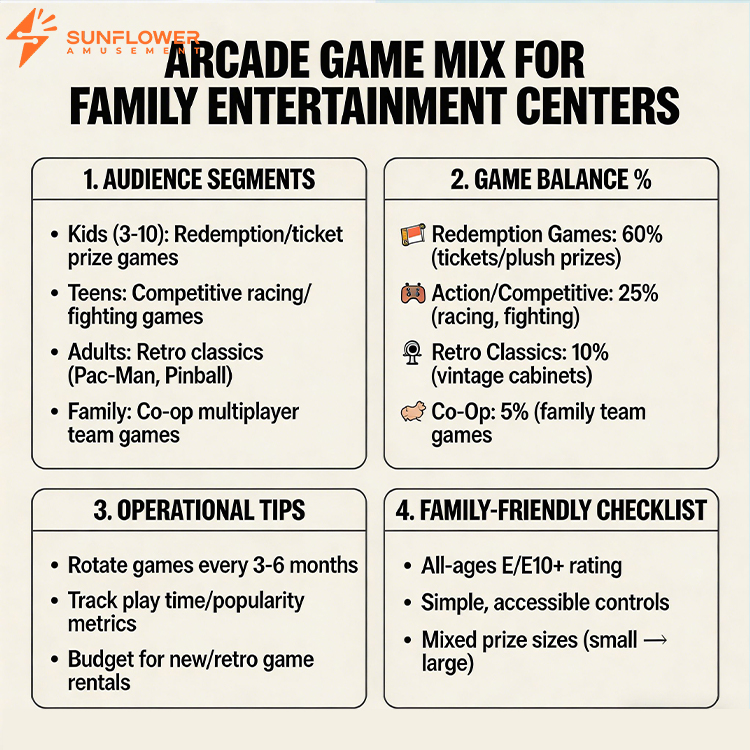
A successful family entertainment center is not built by filling the floor with random machines. It is built by creating the right game mix. For venue owners, distributors, and project buyers, the arcade game mix affects customer flow, age-group appeal, repeat visits, visual attraction, and long-term operating performance.
Many buyers focus first on individual products, but the stronger question is how those machines work together as a complete entertainment environment. A prize crane may attract one kind of player, while simulator games appeal to another. Kiddie games support family participation, while redemption games help drive repeat play. When these categories are planned strategically, the venue feels more balanced, more active, and more commercially effective.
This guide explains how to plan the right arcade game mix for a family entertainment center and what buyers should consider before purchasing equipment.
Why the Game Mix Matters More Than a Single Machine
A single machine can be popular, but a venue succeeds because of the overall experience. The right mix of arcade machines helps create a floor that serves different ages, encourages longer stays, and supports multiple spending opportunities across one visit.
A poor mix creates the opposite effect. Too many machines with similar gameplay can make the venue feel repetitive. Too many products for only one age group can limit family participation. Too many large cabinets can reduce traffic flow and make the floor harder to manage.
That is why game selection should always be linked to venue type, target customer profile, and space planning.
Start with the Venue’s Main Customer Groups
Before buying equipment, define who the venue is mainly serving.
Family-Focused Venues
If the location mainly serves parents and children, the mix should emphasize broad accessibility. That usually means more prize games, redemption machines, kiddie games, and interactive products that are easy to understand.
Mixed-Age Entertainment Centers
If the venue serves children, teenagers, and adults, the game mix should be more layered. Family-friendly machines still matter, but the floor should also include more competitive and immersive equipment, such as simulator games or skill-based machines.
Tourism or High-Traffic Locations
In tourist areas or shopping centers, visibility and simple gameplay often matter more. Machines need to attract attention quickly and be understandable to casual visitors with little explanation.
A good FEC equipment plan begins by matching product categories to real audience behavior.
Build the Floor Around Core Game Categories
Most family entertainment centers perform better when they include a balance of core machine categories rather than relying too heavily on one type.
Ticket Redemption Games
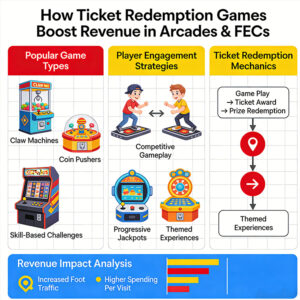
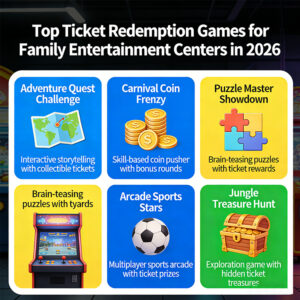
Redemption games remain one of the most practical categories because they support repeat play, visible reward motivation, and family participation. They often work well as a central part of the floor.
Prize Crane and Claw Machines
Prize crane machines are strong visual attractors and are easy for customers to understand. They are especially useful near entrances, high-traffic aisles, or areas where the venue wants immediate visual energy.
Simulator Games
Simulator games add depth to the lineup. They often appeal to older children, teenagers, and adults who want a more immersive experience. These machines can strengthen the venue image when placed in the right positions.
Kiddie Arcade Games
Kiddie machines are essential in family-oriented venues. They help younger children participate and give families more reasons to stay longer instead of losing interest after a few machines.
Video and Skill Games
These machines support variety and can help fill gaps between categories. They are useful for venues that want a more complete entertainment environment rather than a purely prize-driven floor.
Think in Terms of Zones, Not Just Products
A strong arcade floor usually works better when planned in zones. Instead of placing machines one by one without logic, group equipment by player type, traffic behavior, or entertainment purpose.
For example:
- entrance zone with visually attractive machines such as claw machines or bright redemption cabinets
- family zone with easier games and broad-age appeal
- kiddie zone with child-friendly cabinets and safe spacing
- competitive zone with skill-based or simulator equipment
- redemption support zone connected to prize display or ticket-related activity
Zoning helps customers understand the space more naturally. It also improves how the venue feels during busy periods.
Balance Visual Attraction with Operational Practicality
Some machines are excellent at grabbing attention, but may not be the right fit if they disrupt flow or exceed the venue’s service capacity. A smart game mix balances appearance with daily operation.
Buyers should review:
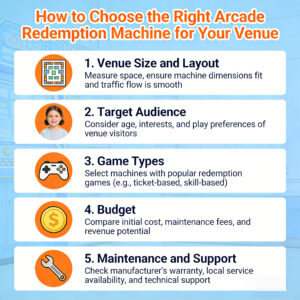
- machine size and required player space
- power and installation requirements
- maintenance access
- expected durability under commercial use
- noise and visual intensity in nearby areas
- how well the machine fits surrounding products
The best floor is not always the one with the largest cabinets. Often, it is the one that feels active, easy to navigate, and appropriate for the venue’s audience.
Avoid Overconcentration in One Category
One of the most common planning mistakes is buying too many similar machines. Even if a category is popular, excessive repetition can reduce the overall quality of the venue experience.
For example, a floor with too many nearly identical claw machines may look crowded rather than exciting. A floor filled only with high-intensity games may reduce accessibility for younger children. A venue with too many kiddie machines may not engage older customers for long.
Balance matters because entertainment centers usually depend on group visits. The machine lineup should give different people in the group a reason to participate.
Consider Revenue Logic and Customer Flow Together
A good arcade game mix should support both entertainment and movement. Machines should be selected not only for their individual appeal, but also for how they influence traffic distribution and repeat play across the floor.
Some products perform well near the entrance because they create instant attention. Others are more suitable deeper inside the venue, where customers are already committed to staying longer. Some machines support quick play, while others create longer engagement cycles.
When equipment is arranged thoughtfully, the venue feels more dynamic and better organized. That improves the customer experience and can indirectly support better spending patterns.
Questions Buyers Should Ask Before Finalizing the Equipment Mix
Before placing an order, buyers should ask a few strategic questions.
- Does the machine mix match the age range of our main customers?
- Are we balancing attraction, replay value, and family accessibility?
- Are we using floor space efficiently?
- Do we have too many machines from one category?
- Can the supplier support multiple product categories consistently?
- Will the mix still make sense during peak traffic periods?
These questions help buyers think like venue planners, not just machine buyers.
Why Supplier Experience Matters in Game Mix Planning
An experienced amusement equipment manufacturer can often help buyers make better decisions earlier. Instead of simply selling products one by one, a stronger supplier understands how claw machines, redemption games, simulator products, and kiddie machines work together in commercial venues.
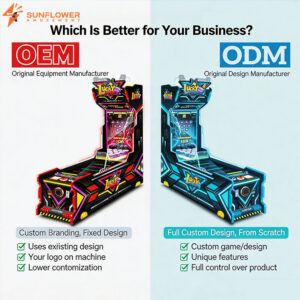
This is especially important for overseas buyers planning a new project, replacing older machines, or expanding into a larger entertainment model. A supplier with broad product categories and OEM/ODM support can often provide more practical guidance across the full venue lineup.
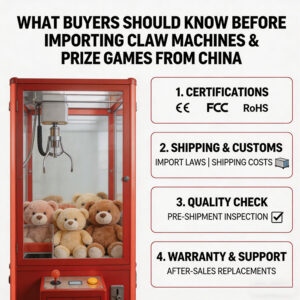
For buyers sourcing from China, this means it is worth choosing a manufacturer that can support multiple categories, provide clear specifications, and communicate realistically about what fits the venue best.
Final Thoughts
Planning the right arcade game mix is one of the most important decisions for any family entertainment center. The goal is not to fill the space with as many machines as possible. The goal is to create a balanced entertainment environment that attracts different age groups, supports smooth customer flow, and performs well over time.
When venue owners and buyers think in terms of category balance, zoning, audience fit, and operational practicality, they are more likely to build a game floor that supports both customer satisfaction and business performance.
If you are developing a new FEC or updating an existing arcade, start by planning the full machine mix before making individual product decisions. That approach leads to stronger long-term results.
FAQ
An arcade game mix is the combination of machine categories used in a venue, such as redemption games, claw machines, simulator games, kiddie games, and skill-based machines.
The right mix helps attract different age groups, improves customer flow, supports repeat visits, and creates a more balanced entertainment experience.
There is no single number for every venue, but most FECs benefit from a balanced selection across several categories rather than relying too heavily on just one machine type.
Yes. Claw machines are visually attractive, easy to understand, and often useful for entrance zones or high-traffic areas.
A supplier with experience across multiple machine categories can help buyers compare product types, understand space requirements, and build a more effective equipment mix.
Internal Link Suggestions
CTA: Get a Quote for your FEC equipment plan or contact Sunflower Amusement for help selecting the right arcade game mix for your venue.

Add comment