


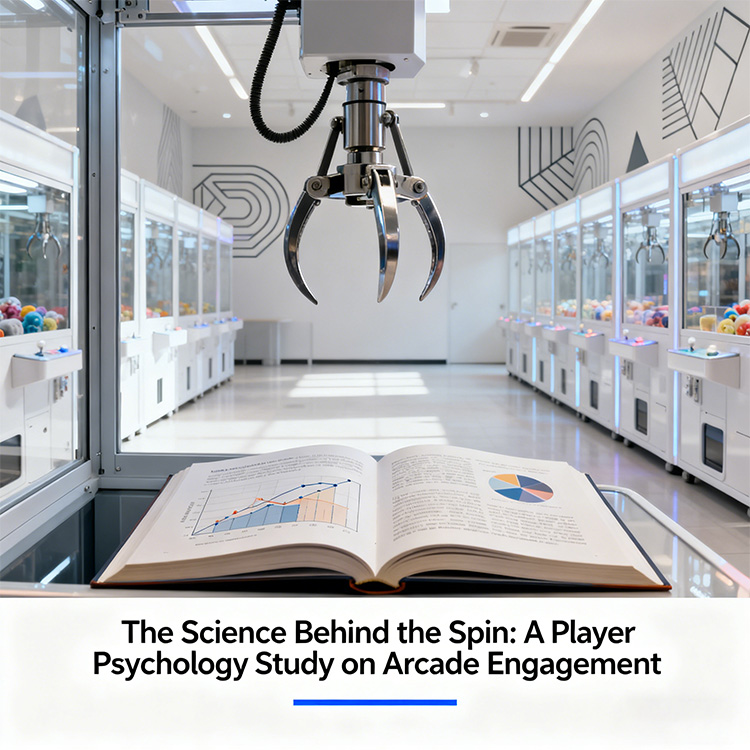
Why do players keep coming back? Dive into our player behavior study exploring the core psychological principles that drive engagement in arcades and how to leverage them.
The irresistible allure of the arcade is no accident. Beyond the flashing lights and exciting sounds lies a deep undercurrent of human psychology. Understanding the mental models that drive player behavior is key to creating deeply engaging experiences that keep players entertained and operators profitable. This report delves into the core psychological principles at play.
Principle 1: The Power of Variable Rewards
The most powerful psychological driver in gaming is the variable-ratio reinforcement schedule. Unlike a fixed reward (e.g., a win every 10th play), a variable reward is unpredictable.
In Practice: A player never knows if this is the turn they will win the coveted plush toy from the claw machine. This uncertainty triggers a dopamine release in the brain, creating a cycle of anticipation and action that is far more compelling than a guaranteed outcome. It’s the same mechanism that makes game machines and social media feeds so engaging.
Principle 2: The “Near-Miss” Effect
A near-miss—when a player comes incredibly close to winning—is often perceived not as a loss, but as an almost-win. Cognitive psychology shows that our brains process near-misses similarly to actual wins, fueling motivation to try again.
In Practice: When the claw picks up a prize only to drop it just short of the chute, the player doesn’t feel defeated; they feel “I almost had it!” This feeling encourages immediate re-engagement, turning a loss into a powerful motivator for the next coin.
Principle 3: The Sunk Cost Fallacy & Endowed Progress
Once a player invests time or money, they are more likely to continue to avoid feeling like their initial investment was wasted. This can be positively framed as “endowed progress.”
In Practice: A ticket redemption system masterfully leverages this. Showing a player they have 450 tickets out of the 500 needed for a prize makes them feel they’ve already made significant progress. They are far more likely to continue playing to reach their goal rather than “waste” the tickets they’ve already earned.
Designing with Psychology in Mind
At Guangzhou Sunflower Amusement, our R&D is informed by these principles. We design our interactive amusement devices to ethically leverage these psychological triggers, creating a fulfilling player experience that naturally encourages repeat engagement and builds long-term loyalty for your venue.
By building your arcade strategy on a foundation of player psychology, you move beyond simple entertainment to create a deeply resonant and commercially sustainable experience.







Add comment